A floor coating should last 10 to 20 years. A bad one can start peeling in 10 months. The difference is rarely the product in the bucket. It is the flooring contractor who preps the slab, tests it, mixes the material, and stands behind the work.
The trouble is that most homeowners only hire a floor coating pro once or twice in their lives. You type “flooring companies near me,” get a page of five-star profiles, and every quote sounds the same. So how do you tell a real craftsman from a weekend roll-on crew?
This guide shares the 7 secrets we wish every customer knew before calling anyone, including us. You will learn what to ask, what a fair price looks like, which red flags to walk away from, and how Florida heat and humidity change the rules.
Quick Answer: How to Choose a Flooring Contractor for Floor Coatings
The right flooring contractor for an epoxy floor coating will grind (not acid wash) your concrete, test it for moisture before quoting, name the exact products and coat thicknesses in writing, show you local jobs at least a year old, carry proof of insurance, and give you a written warranty that spells out what is and isn’t covered.
| What to Check | What a Good Answer Sounds Like |
| Surface prep | Diamond grinding with dust control |
| Moisture testing | Tested before the quote, results shared with you |
| Materials | Named brands, 100% solids epoxy or polyaspartic, mils per coat listed |
| Proof of work | Local references and photos of floors 1 to 5 years old |
| Insurance | Certificate of insurance sent straight from the agent |
| Price | Line-item quote, typically $4 to $12 per square foot for coated floors |
| Warranty | Written, with clear terms on peeling, staining, and hot tire pickup |
Why Choosing the Right Flooring Contractor Matters More in Florida
Epoxy flooring is a chemical bond, not a paint job. The coating has to grab into open, clean concrete pores. When that bond fails, the floor peels in sheets, and the only fix is grinding everything off and starting over. That often costs more than the first install.
Northeast Florida makes the job harder. Our slabs sit on sandy soil with a high water table, and many garages were poured without a vapor barrier. Summer humidity regularly tops 80%. Moisture pushing up through the slab is one of the leading causes of coating failure we see on repair calls.
Add strong UV through open garage doors and 90-degree afternoons that speed up cure times, and you can see why a cookie-cutter approach doesn’t work here. Experience with local conditions is not a bonus. It is the job.
7 Secrets to Finding the Right Floor Coating Contractor
Secret 1: Ask How They Prep the Concrete, Then Ask to See the Equipment
Ask any installer what matters most, and they will say “prep.” Ask how they do it, and the answers split fast.
- Diamond grinding opens the concrete to a profile coatings can grip. The industry standard for most residential floor coating jobs is a concrete surface profile (CSP) of about 2 to 3, as defined by the International Concrete Repair Institute.
- Acid etching is cheaper and faster, but it often leaves residue and an uneven profile. It is a common shortcut.
- “No prep needed” products are the biggest red flag. If a crew can’t explain how the coating bonds, it probably won’t.
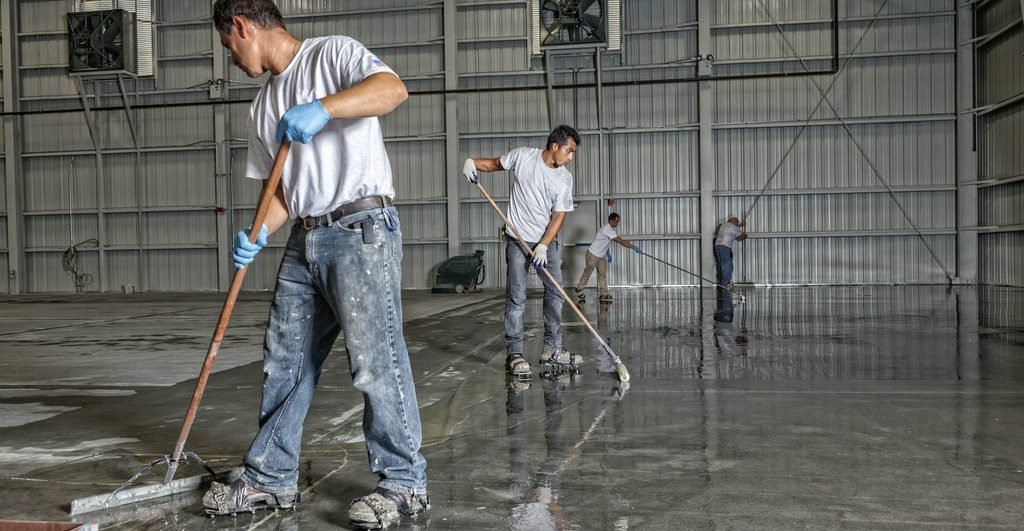
A serious flooring contractor owns planetary grinders and HEPA dust collection and is happy to tell you the model. They should also explain how they handle cracks, spalls, and old sealer before the first coat goes down.
Secret 2: Moisture Testing Should Happen Before the Price
This is the step most quotes skip. Two common tests are the calcium chloride test (ASTM F1869) and the in-slab relative humidity probe (ASTM F2170). Even a simple plastic sheet test (ASTM D4263) is better than nothing for a quick screen.
Ask, “Will you test my slab for moisture before you give me a final price?” If the answer is “we’ve never had a problem,” keep looking. If your slab reads high, a good contractor will recommend a moisture-mitigating primer and explain the added cost up front instead of surprising you later.
Secret 3: Get the Product Names, Solids Content, and Mil Thickness in Writing
“Epoxy” is a broad word. Big-box kits are often water-based and very thin. Professional epoxy floor coating systems are usually 100% solids, meaning nothing evaporates as it cures, and the film you pay for is the film you keep.
Your written quote should list:
- The base coat brand and product name
- Whether it is 100% solids epoxy, polyurea, or polyaspartic
- Thickness for each coat in mils (a full broadcast flake system often totals 20 mils or more)
- Flake or quartz type and coverage (partial or full broadcast)
- The topcoat, and whether it is UV-stable
That last point matters in Jacksonville. Standard epoxy can amber or yellow in direct sun. Many installers use an epoxy base with a polyaspartic or urethane topcoat for UV resistance in garages and lanais.
Secret 4: Look at Floors That Are Older Than One Year
Fresh floors always look great. The real test is how a coating looks after a couple of Florida summers, hot tires, and dropped tools.
Ask for photos or addresses of floors installed 1 to 5 years ago, ideally close to your home. Call two references and ask three questions: Did the crew show up on time? Has anything peeled or stained? Did the company respond if there was a problem?
Online reviews help too, but read the 3-star reviews and the owner replies. How a company handles complaints tells you more than a stack of perfect ratings.
Secret 5: Verify Insurance and Registration Yourself
Florida does not issue a state license specific to floor coatings, which means anyone can call themselves a floor coating pro. That makes your own checks more important.
- Business registration: Look up the company on Sunbiz.org, Florida’s official business registry, and confirm it is active.
- Local license: Ask for a local business tax receipt for their city or county.
- Liability insurance: Ask the insurance agent to email you a certificate of insurance directly. Do not accept a photo of an old card.
- Workers’ compensation: If the company has employees on your property, ask for proof of coverage or a valid exemption.
A reputable company can send all of this in a single email. Hesitation is your answer.
Secret 6: Read the Warranty Like a Contract (Because It Is One)
“Lifetime warranty” sounds great until you read the fine print. Many warranties exclude the most common failures, such as moisture, hot tire pickup, or chemical stains.
Ask specifically:
- Does it cover peeling and delamination, and for how long?
- Does it cover hot tire pickup?
- Is moisture-related failure covered if they did the testing?
- Is the warranty from the installer, the manufacturer, or both?
- What do you have to do to keep it valid, such as approved cleaners?
A shorter, clear warranty from a local company that will answer the phone is often worth more than a vague lifetime promise from a franchise with no local office.
Secret 7: Compare Quotes Line by Line, Not Bottom Line
The cheapest quote usually saves money by cutting prep, thickness, or topcoat. To compare fairly, line up each bid on the same items: square footage, prep method, crack repair, moisture treatment, base coat, flake coverage, topcoat, and cure time.
Here is a general range to sanity-check bids in our area. Your price depends on slab condition, size, and system type.
| Floor Coating System | Typical Installed Cost per Sq Ft |
| Single-coat epoxy or sealer | $3 to $5 |
| Epoxy base with partial flake and clear topcoat | $4 to $8 |
| Full broadcast flake with polyaspartic topcoat | $6 to $12 |
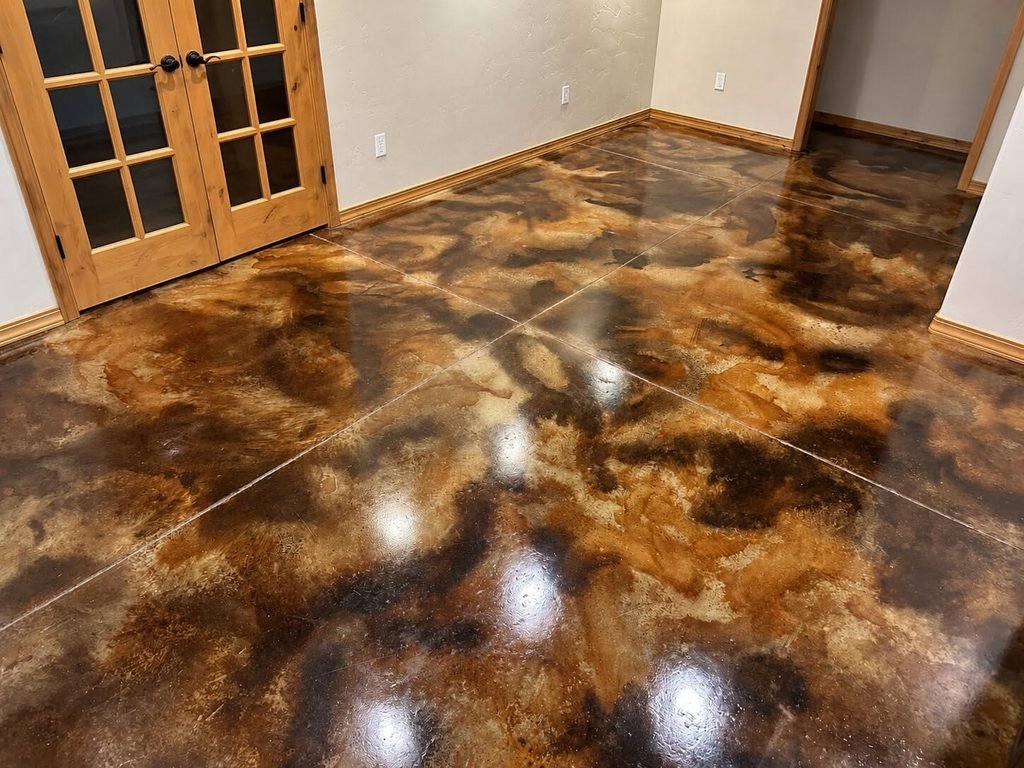
| Metallic or decorative epoxy | $8 to $15 or more |
If one bid is far below the others, ask what is missing. It is almost always prep or topcoat.
Red Flags That Should End the Conversation
Some warning signs are clear enough that you can stop right there:
- Pressure to sign today for a “special price”
- Large cash deposits, or no written contract
- No moisture testing and no explanation of prep
- Refusal to name the coating brand or thickness
- No local address or project photos from the area
- A one-day install promise on a slab with obvious damage or moisture
Residential Floor Coating vs. Commercial Projects: Does the Contractor Change?
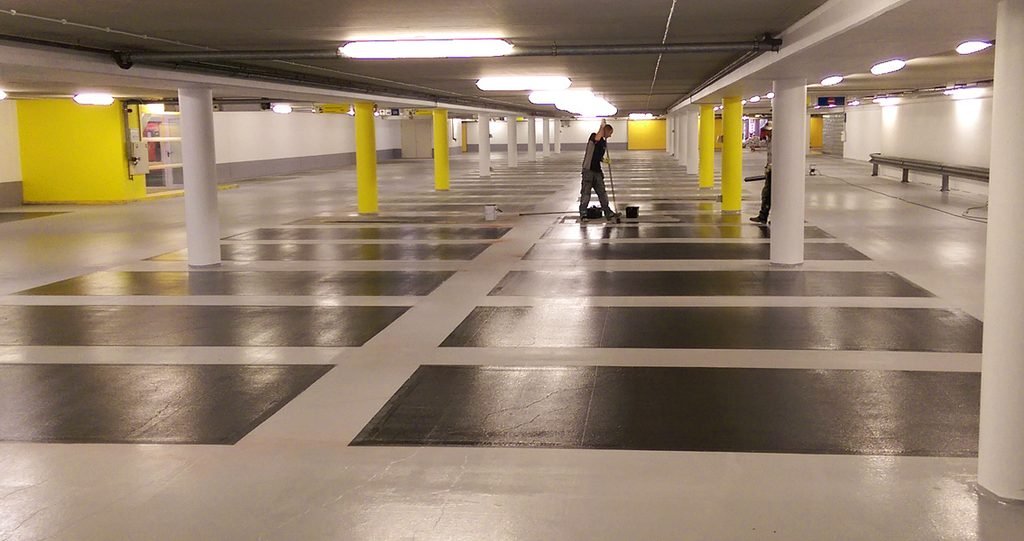
Yes, and it should. A residential floor coating job is about appearance, slip resistance, hot tire pickup, and getting your garage back fast. Commercial floors deal with forklifts, chemicals, health code rules, and tight shutdown windows.
Some flooring contractors in Jacksonville do both well. Others specialize. Ask what percentage of their work matches your project type and request examples of similar spaces. If you’re weighing a coating against a bare finish for a showroom or shop, our team also offers Polished Concrete Flooring Services, which can be a better fit for high-traffic commercial floors.
Questions to Ask Before You Hire Any Flooring Contractor
Print this list or save it to your phone before your estimate visit:
- How will you prepare my concrete, and what equipment do you use?
- Will you test for moisture, and which test do you use?
- Which products will you install, and how thick is each coat?
- Is the topcoat UV-stable?
- How do you repair cracks and pitting first?
- When can I walk on it, and when can I park on it?
- Can I see floors you installed two or more years ago nearby?
- Can your agent send me a certificate of insurance?
- What does your warranty cover, and who backs it?
- What is not included in this quote?
How NFL Concrete Flooring Approaches Every Floor Coating Job
We built our process around the same checklist above. Every epoxy flooring project starts with an on-site look at the slab, moisture testing where conditions call for it, and a written, line-item estimate that names the products we will use. Our crews diamond grind with dust control, repair cracks before coating, and use UV-stable topcoats for garages and patios that see Florida sun.
We work in homes and businesses across Northeast Florida, including Jacksonville, Neptune Beach, Ponte Vedra, and the beaches. Coastal homes face extra salt air and humidity, so if you live near the water, visit our Floor Coating Contractor In Atlanta page for details on our Atlantic Beach, FL projects. You can also see our full range of options for Concrete Flooring in Jacksonville FL on our homepage.
Frequently Asked Questions About Hiring a Flooring Contractor
How long does an epoxy floor coating last?
A professionally installed epoxy floor coating with a quality topcoat typically lasts 10 to 20 years in a home garage. Lifespan depends most on prep, moisture levels, thickness, and how much traffic and sun the floor gets.
How long does a garage floor coating install take?
Most residential garage floors take 1 to 2 days. You can usually walk on the floor within 12 to 24 hours and park on it after 2 to 7 days, depending on the products and the temperature.
Is epoxy flooring slippery?
It can be when wet if the surface is smooth. Flake broadcasts and anti-slip additives in the topcoat add grip, which is why we recommend them for garages, lanais, and pool-adjacent areas.
Can a floor coating go over cracked concrete?
Yes, once the cracks are properly repaired. A good contractor fills cracks and spalls with a repair material before coating. Structural cracks or heaving should be evaluated first, since a coating will not stop slab movement.
Do flooring contractors in Jacksonville need a license?
Florida does not have a state license specific to floor coatings, but companies should be registered with the state, hold a local business tax receipt, and carry general liability insurance. Always verify these yourself before signing.
Should I pick epoxy or polyaspartic?
Many of the best floors use both. Epoxy makes a strong, well-bonded base, and a polyaspartic topcoat adds UV stability and scratch resistance. Ask your contractor to explain why they recommend a specific system for your space.
Find the Right Floor Coating Pro Before You Sign
The right flooring contractor shows you their prep method, tests your slab, names their materials, proves their insurance, and puts the warranty in writing. Use the 7 secrets above, and you will spot the difference between a floor that lasts two decades and one that peels after the first summer.
Ready to talk about your garage, patio, or commercial floor? Call NFL Concrete Flooring today at (904) 554-2869 or email estimatesdept@nflconcreteflooring.com for your free estimate.