Concrete floors are built to last, but they are not built to last forever without care. Garage slabs crack. Warehouse floors chip at the joints. Patios and pool decks flake, pit, and fade under the Florida sun. Left alone, small problems spread, and a repair that once cost a few hundred dollars becomes a full replacement.
The good news is that most damage can be fixed. Good concrete floor repair is not one product or one patch. It is matching the right method to the right problem after an honest look at why the damage happened.
This guide explains the most common types of floor damage, the proven repair methods for each, what concrete floor repair costs in 2026, and how to tell when you need a professional. Whether you own a home, manage a commercial building, or run an industrial facility, you will know what to ask for before you call anyone.
Concrete Floor Repair at a Glance
| Question | Quick Answer |
| Most common problems | Cracks, spalling, scaling, failed joints, uneven or sunken slabs |
| Typical professional cost | About $1,000 to $5,000 for most resurfacing jobs (Angi, 2026) |
| Small crack repair | About $250 to $800 |
| Spall repair | About $300 to $3,500 |
| Best fix for worn, rough surfaces | Grinding plus a self leveling resurfacer or overlay |
| Best final step | A sealer or floor coating to protect the repair |
| Repair or replace? | Repair if the base is sound; replace if the slab is moving or failing |
What Causes Concrete Floors to Crack and Deteriorate?
Before fixing concrete floor damage, you need to know what caused it. Patching a crack without solving the cause usually means the crack comes back, often right next to the patch.
Shrinkage and Curing Problems
Concrete loses water and shrinks as it cures. If the slab was poured too wet, dried too fast, or was not given proper control joints, shrinkage cracks appear. These are usually thin, random, and not a structural threat on their own.
Moisture and Florida’s Climate
Jacksonville averages about 53.4 inches of rain per year, according to NOAA climate normals reported by News4JAX. Water moving up through a slab carries salts to the surface, which causes white efflorescence, lifts coatings, and weakens the top layer. High humidity also slows curing on repair materials, which is why timing and product choice matter so much here.
Settlement and Poor Soil Prep
When the soil under a slab was not compacted well, or when water washes it away, sections of the floor sink. That creates cracks with one side higher than the other, trip hazards at joints, and rocking slabs. Sandy Northeast Florida soils and heavy summer storms make this more common than many owners expect.
Heavy Loads and Impact
Forklifts, pallet jacks, dropped tools, and parked vehicles all punish concrete. Hard wheels hammer joint edges until they chip and break apart. This is the most common type of damage in warehouses and shops, and the main reason industrial concrete repair is its own specialty.
Chemicals, Salts, and Wear
Oil, salt air near the coast, pool chemicals, acids, and cleaning products eat away at the cement paste. Over time, the surface roughens, the sand and stone show through, and the floor starts to “dust.”
For a deeper look at these problems and how to spot them early, see our guide to Common Concrete Repair Issues.
Types of Concrete Floor Damage (and What Each One Means)
Each type of damage points to a different concrete floor repair method. Here is how to read what you are seeing.
- Hairline cracks. Very thin cracks, often in a random or map pattern. Usually cosmetic shrinkage cracks.
- Wider or growing cracks. Cracks you can fit a coin into, or ones that get longer or wider over months. These need attention, and a pro should check for movement.
- Uneven cracks. One side sits higher than the other. This usually means settlement or soil problems below the slab.
- Spalling. Chunks or flakes break off the surface, sometimes exposing stone or rusted rebar. Common near joints, edges, and on pool decks.
- Scaling and pitting. The top layer peels or wears away in thin patches, leaving a rough, pocked surface.
- Failed joints. Control and expansion joints with crumbling edges, missing filler, or dirt packed inside.
- Dusting and surface wear. A powdery surface that leaves residue on shoes and tires.
- Peeling coatings. Paint, epoxy, or sealer lifting in sheets, often a sign of moisture or poor prep under the coating.
Tip: Put a pencil mark at each end of a crack and date it. If the crack grows past your marks in a few weeks or months, the slab is still moving, and the cause needs to be fixed before any surface repair.
Proven Concrete Floor Repair Solutions
These are the concrete floor repair methods professionals rely on. Most real projects combine two or three of them.
1. Crack Routing and Filling
For non-moving cracks, the crack is cleaned, often widened with a crack-chasing saw or grinder so the filler can grip, then vacuumed and filled. Rigid epoxy fillers suit stable cracks in interior floors. Semi-rigid polyurea and flexible polyurethane fillers suit cracks and joints that see small movements or temperature swings. A foam backer rod can be pushed into deep voids first so the filler sets at the right depth.
The key detail that many DIY repairs miss is cleaning. Dust, oil, and old sealant in the crack will stop any filler from bonding, no matter how good the product is.
2. Joint Repair and Rebuilding
Joints are designed to let the slab move, so they cannot be treated like cracks. Damaged joint edges are saw-cut back to sound concrete, rebuilt with a fast-setting repair mortar or epoxy nosing, and then refilled with a joint filler matched to how the floor is used. In warehouses, a semi-rigid filler that supports hard wheels is the standard. Joints that are meant to move should never be filled with a hard material, or new cracks will form beside them.
3. Spall and Patch Repair
Spalled areas are cut around with a saw to create clean, square edges, and loose concrete is chipped away until the base is solid. If rebar is exposed and rusted, it is cleaned and treated. The area is then filled with a polymer-modified repair mortar or epoxy mortar and finished flush with the floor. Feathering a patch to a zero edge without that square cut is a common reason patches pop loose later.
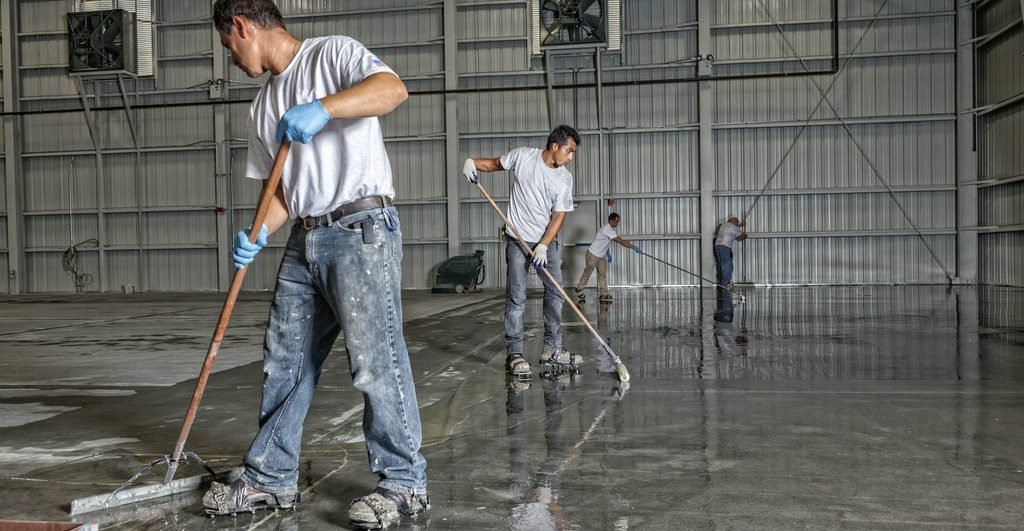
4. Self Leveling Concrete Floor Resurfacer
When a floor is rough, pitted, or uneven across a large area, patching every spot does not make sense. A self leveling concrete floor resurfacer is a pourable, cement-based topping that flows out and finds its own level, creating a new, smooth surface over the old slab.
The process usually looks like this:
- Grind the slab to remove coatings, contaminants, and weak surface paste.
- Repair cracks, joints, and deep spalls first.
- Apply the manufacturer’s primer so the topping bonds and does not pinhole.
- Pour and spread the resurfacer to the planned thickness.
- Let it cure, then seal, stain, or coat it.
Resurfacers are a smart choice for garages, basements, shops, and commercial floors that are structurally sound but worn out. They are not a fix for slabs that are still moving or sinking.
5. Overlays and Microtoppings
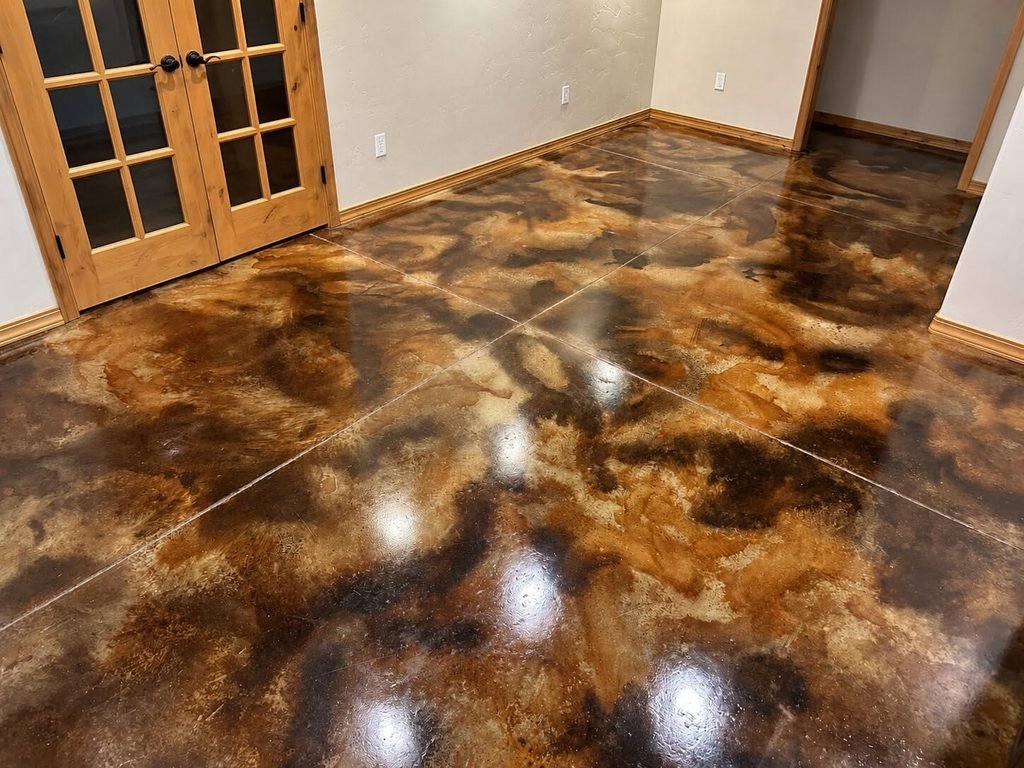
Thin overlays and microtoppings rebuild worn concrete with a new decorative face. They can be troweled smooth, colored, stained, or stamped. They are a common way to refresh patios, pool decks, and interior floors without tearing them out.
6. Slab Leveling
For sunken or rocking slabs, leveling lifts the concrete back into place by pumping material under it. Mudjacking uses a cement-based slurry, and polyurethane foam leveling uses a lightweight expanding foam. After the slab is lifted, the cracks and joints are sealed so water cannot wash out the soil again.
7. Section Removal and Replacement
When a section is badly broken, heaving, or crumbling all the way through, cutting it out and pouring new concrete is the honest answer. A good contractor will replace only the failed section and tie it into the existing slab, rather than recommending a full tear-out you do not need.
Explore how our team handles each of these methods on our Concrete Repair Services page.
Floor Concrete Coating: Protecting the Repair

Concrete floor repair fixes the damage. A coating keeps it from coming back. Once cracks, joints, and spalls are repaired and the surface is smooth, a floor concrete coating seals out water, oil, and chemicals and gives the floor a finished, uniform look that hides patch lines.
Common options include:
- Penetrating sealers for driveways, patios, and pool decks that need to stay breathable and slip-resistant.
- Acrylic sealers for stained and decorative concrete where color depth matters.
- Epoxy coatings for garages, shops, and commercial floors that need a tough, cleanable surface.
- Polyaspartic and polyurea topcoats for fast return to service and better UV resistance than standard epoxy.
The rule that matters most is this: never coat over unrepaired cracks or failed joints. The cracks will “telegraph” through the coating within months, and moving joints will tear it. Repair first, test for moisture, then coat.
Industrial Concrete Repair: What’s Different
Industrial concrete repair follows the same basic ideas as residential concrete floor repair, but the stakes are higher. Forklift wheels, racking loads, chemical spills, and around-the-clock traffic expose any weak repair quickly. Downtime also costs real money.
Industrial and commercial repairs usually focus on:
- Joint edge rebuilding with high-strength epoxy or polymer nosing that stands up to hard wheels.
- Semi-rigid joint fill that supports traffic while still allowing small slab movement.
- Fast-setting materials so aisles and loading docks can reopen in hours, not days.
- Phased scheduling around shifts, weekends, or closed sections of the building.
- Chemical-resistant coatings in plants, food areas, and maintenance shops.
- Safety markings for aisles, walkways, and hazard zones once the floor is restored.
If you manage a warehouse, distribution center, restaurant, or auto shop, ask any contractor how they will keep your operation running during the work. A clear plan for downtime is as important as the repair itself.
How Much Does Concrete Floor Repair Cost in 2026?
Price depends on the size of the area, the type and depth of damage, access, and the finish you want. These national figures from Angi’s 2026 cost data give a useful starting point.
| Repair Type | Typical Cost |
| Minor or shrinkage crack repair | $250 to $800 |
| Wide crack removal and repair | $200 to $1,000+ |
| Spall repair | $300 to $3,500 |
| Concrete resurfacing (basic) | $3 to $5 per sq ft |
| Resurfacing with extensive damage | Up to $9 per sq ft |
| Microtopping overlay | $3 to $7 per sq ft |
| Decorative overlay | $6 to $10 per sq ft |
| Slab leveling (mudjacking) | $3 to $6 per sq ft |
| Sealing | $1 to $1.75 per sq ft |
For context, Angi puts the average concrete resurfacing project at about $2,000, with most jobs falling between $1,000 and $5,000. These are national averages. Local labor, the condition of your slab, and Florida’s moisture conditions will move the final number, so an on-site inspection is the only way to get an accurate quote.
DIY vs. Professional Concrete Floor Repair
Some repairs are fair game for a handy owner. Others are not worth the risk.
| Repair | DIY Friendly? | Why |
| Small hairline cracks in a garage | Yes | Low risk with a quality crack filler |
| Cleaning and resealing a sound floor | Often | Works if there is no moisture or coating issue |
| Wide, uneven, or growing cracks | No | Signs of movement that need diagnosis |
| Spalling with exposed rebar | No | Needs saw cuts, rebar treatment, and proper mortar |
| Large-area self leveling resurfacer | No | Needs grinding, priming, and fast, even placement |
| Warehouse joints and industrial floors | No | Loads and downtime demand pro-grade materials |
DIY patches often fail because the surface was not ground or cleaned well enough, or because the product was wrong for the movement in the slab. A failed patch also makes the next professional repair harder, since the old material must be removed first.
Signs It’s Time to Call a Professional
Call a concrete repair contractor if you notice any of the following:
- Cracks wider than a coin, or cracks that keep growing
- One side of a crack sitting higher than the other
- Spalling near joints, edges, or around exposed rebar
- Coatings that peel, bubble, or lift in sheets
- Trip hazards in walkways, garages, or customer areas
- Water pooling on the floor or seeping through the slab
- Chipped joints in areas with forklift or cart traffic
Fixing concrete floor problems at this stage almost always costs less than waiting until the slab needs to be replaced.
How to Prevent Future Concrete Floor Damage
The best concrete floor repair is the one you never need. A few simple habits protect your slab and any repairs already made.
- Seal or coat the surface and reseal on the schedule your sealer requires.
- Keep joints filled so dirt and water cannot get inside and break the edges.
- Manage water with gutters, downspouts, and grading that move water away from slabs.
- Clean spills quickly, especially oil, pool chemicals, and acids.
- Use the right wheels and mats in shops and warehouses to reduce impact on joints.
- Inspect once a year and repair small cracks while they are still small.
Frequently Asked Questions
Can a cracked concrete floor be repaired, or does it need to be replaced?
Most cracked floors can be repaired. If the slab is stable and the base is sound, crack filling, joint repair, or resurfacing will restore it. Replacement makes sense only when sections are broken through, heaving, or still sinking.
How long does concrete floor repair last?
A properly prepared repair, protected by a sealer or coating, can last for many years. Repairs that skip surface prep, ignore moisture, or fill moving joints with rigid material tend to fail much sooner.
What is the best product for fixing concrete floor cracks?
It depends on movement. Rigid epoxy works for stable, non-moving cracks. Semi-rigid polyurea or flexible polyurethane works better for joints and cracks that move with temperature and load.
Can you put a self leveling resurfacer over old concrete?
Yes, if the old slab is structurally sound. The floor must be ground clean, repaired, and primed first. A self leveling concrete floor resurfacer will not fix a slab that is still settling.
How long before I can walk or drive on a repaired floor?
Fast-setting repair materials may allow foot traffic within hours. Resurfacers and coatings usually need longer before vehicles can park on them. Your contractor should give you a clear return-to-service time for each product used.
Do I need to repair cracks before applying an epoxy floor coating?
Yes. Cracks and damaged joints must be repaired before any floor concrete coating is applied. Otherwise, the cracks will show through, and moving joints will split the coating.
Get Expert Concrete Floor Repair with NFL Concrete Flooring
Cracks, spalling, and worn surfaces do not fix themselves, and they rarely stay the same size. The sooner you address them, the more of your existing slab you can save.
N FL Concrete Flooring & Staining inspects every floor first, finds the cause of the damage, and recommends the repair that fits your slab, your budget, and how you use the space. We would rather restore sound concrete than sell you a replacement you do not need. Learn more about our Concrete Flooring in Jacksonville FL for homes and businesses across Northeast Florida.