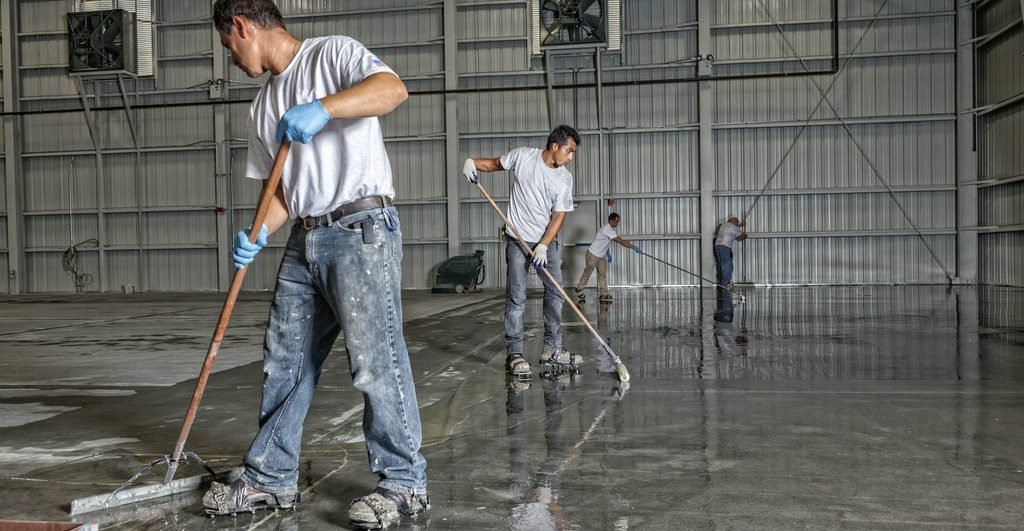
Plain gray concrete does not have to stay plain. When you stain concrete, you turn a basic slab into a floor with deep, rich color that looks like marble, leather, or natural stone. And because the color goes into the concrete instead of sitting on top like paint, it will not peel or flake.
The catch is that staining is less forgiving than it looks in online videos. Skip a prep step, and the color comes out blotchy. Choose the wrong sealer, and a Florida summer turns it cloudy. This guide walks you through how to stain concrete floors the way professionals do, which stain to choose, what it costs in 2026, and when it makes sense to call in a pro.
Concrete Staining at a Glance
Here is the short version before we dig in.
| Question | Quick Answer |
| What is it? | A color treatment that soaks into concrete instead of coating it |
| Main stain types | Acid (reactive) stain and water-based stain |
| Professional cost | About $2 to $4 per sq ft for one color, up to $25 for custom designs |
| New concrete wait time | Usually at least 28 days of curing before staining |
| How long it lasts | The color is permanent; the sealer needs refreshing every 2 to 5 years |
| Best areas | Living areas, kitchens, garages, patios, pool decks, and driveways |
| DIY or pro? | DIY can work on small, clean slabs; pros handle repairs, design, and sealing |
What Does It Mean to Stain Concrete?
To stain concrete is to add color that penetrates the surface of the slab. Concrete is porous, so stain soaks into the top layer instead of forming a film on top. That is the big difference between staining and painting. Paint covers concrete. Stain becomes part of it.
Because the color is inside the surface, it holds up to foot traffic far better than paint. What protects that color from wear, spills, and sunlight is the sealer applied at the end. Think of the stain as the color and the sealer as the armor.
Staining also works with your slab’s natural character. Small variations, trowel marks, and aggregate all show through. Many homeowners love that one-of-a-kind look. If you want a perfectly uniform color, you will want to know that going in.
Acid Stained Concrete vs. Water-Based Stain

The first decision when you stain concrete is which type of stain to use. Both can look beautiful, but they work in very different ways.
Acid Stained Concrete
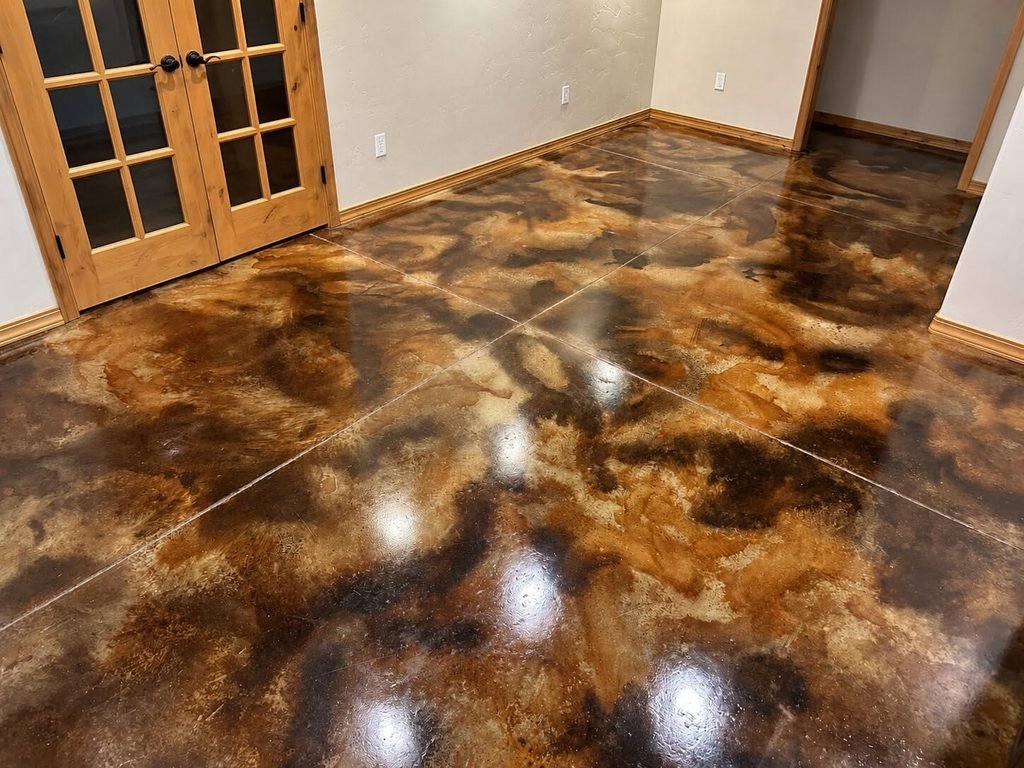
Acid stained concrete gets its color from a chemical reaction. The stain is a mix of water, metallic salts, and a mild acid. When it hits the slab, it reacts with the lime in the concrete and creates color that is truly part of the surface.
The result is a mottled, variegated finish with natural depth. Picture marble, aged leather, or weathered stone. No two floors look the same.
The trade-offs:
- The palette is limited to earth tones such as tans, browns, terra cotta, and soft blue-greens.
- Results depend on the slab, so color can vary from room to room.
- It must be neutralized and rinsed before sealing.
- It requires gloves, eye protection, and good ventilation.
Water-Based Concrete Stain
Water-based stain does not react with the concrete. Instead, it carries fine pigments into the pores of the slab. It gives you far more color options, including blacks, whites, bright tones, and modern grays.
Water-based stain is easier to control, more uniform, low in odor, and does not need neutralizing. It is a strong choice for basements, condos, and homes where you need predictable color. Some homeowners even layer the two, using acid stain for depth and water-based stain to adjust the tone.
| Factor | Acid Stain | Water-Based Stain |
| How it colors | Chemical reaction with the slab | Pigment soaks into the pores |
| Look | Mottled, marbled, one of a kind | More even and predictable |
| Color range | Earth tones | Nearly any color |
| Neutralizing needed | Yes | No |
| Odor and fumes | Strong; needs ventilation | Low |
| Best for | Statement floors, patios, rustic or classic styles | Modern interiors, exact colors, tight spaces |
Decorative Concrete Staining Ideas
Decorative concrete staining goes well beyond one solid color. Here are popular ways to customize a floor:
- Single-color stain. Simple, clean, and the most budget-friendly.
- Multi-color blending. Two or three colors applied in layers for a natural stone look.
- Saw-cut patterns. Shallow cuts create tile, diamond, or plank patterns, each stained a different shade.
- Stencils and borders. Logos, medallions, or borders around a room’s edge.
- Stain over a polished or overlay surface. A great option for older slabs with damage that needs a fresh, smooth base.
For homes, our Concrete Staining for Interior work is often paired with a satin sealer for an easy-care, low-glare finish in kitchens and living rooms.
How to Stain Concrete Floors Step by Step
Here is how to stain concrete floors the way professionals do. Read every step before you start. Most failures come from rushing the prep.
What You Will Need
- Concrete cleaner or degreaser, and a stiff scrub brush or floor machine
- Acid stain or water-based stain
- Two pump sprayers (acid-resistant plastic for acid stain) and a mop or applicator brush
- Neutralizer, such as baking soda or ammonia mixed with water (acid stain only)
- Wet vacuum, painter’s tape, and plastic sheeting to protect walls
- Gloves, eye protection, and a respirator rated for acid fumes
- A concrete sealer suited to the space
Step 1: Check the Concrete
New concrete should cure for at least 28 days before staining, which most stain manufacturers recommend. Then do a water test. Sprinkle water on the slab. If it darkens and soaks in, the stain will absorb. If it beads up, an old sealer or curing compound is still there and must be removed first.
Step 2: Repair and Clean
Fill cracks and chips. Remove paint, drywall mud, carpet glue, and grease. Then scrub the entire floor with a concrete cleaner and rinse well. Any residue left behind blocks the stain and shows up as a light spot.
Step 3: Prepare the Surface
Very smooth or sealed slabs may need light grinding or a profiling product so the stain can soak in evenly. Do not etch before acid stain. The stain itself contains acid, and pre-etching can weaken the reaction. Tape off walls, baseboards, and cabinets.
Step 4: Apply the Stain
Work in small sections. Spray the stain in a light, overlapping circular pattern, then work it in with a brush or applicator if the label calls for it. Keep a wet edge to avoid lap marks. For acid stain, let it react for the time listed on the label, usually 4 to 24 hours. Add a second coat if you want deeper color.
Step 5: Neutralize and Rinse (Acid Stain Only)
Once the reaction is done, neutralize the floor, scrub, and rinse until the water runs clear. Pick up the residue with a wet vacuum. Skipping this step is one of the top reasons sealer peels later.
Step 6: Let It Dry
Allow the slab to dry completely, usually 24 hours or more. In Jacksonville’s humidity, plan on extra drying time, especially on garage slabs and patios. Sealing over trapped moisture is the most common cause of a white, cloudy finish.
Step 7: Seal the Floor
Apply two thin coats of sealer with a roller or low-pressure sprayer. Thin coats cure clear; thick coats puddle and haze. Indoors, many homeowners add a floor wax or finish on top for extra protection in high-traffic areas. Outdoors, use a UV-resistant sealer and an anti-slip additive.
Step 8: Allow Full Cure
Keep foot traffic off for at least 24 hours, furniture off for 48 hours, and vehicles off for several days, or as the sealer label directs.
Stained Concrete Driveway and Outdoor Surfaces
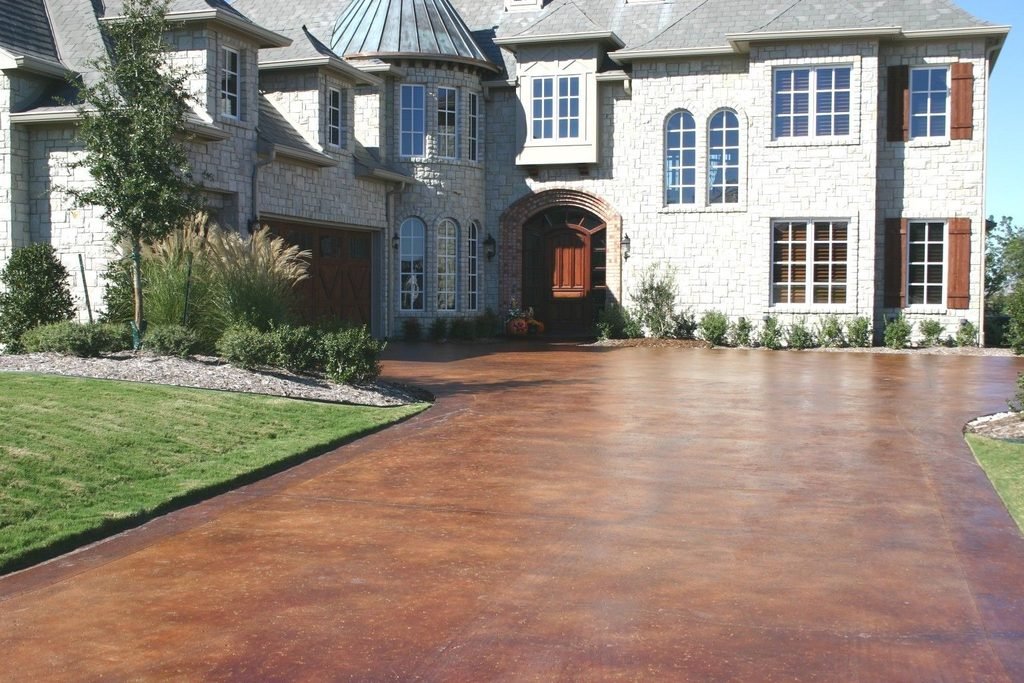
A stained concrete driveway is a smart way to boost curb appeal without tearing out a sound slab. Staining works on driveways, patios, walkways, and pool decks, but outdoor concrete has more to fight off.
In Jacksonville, that means strong UV rays, frequent rain, high humidity, and hot tires. Here is what makes outdoor staining last:
- Use a UV-stable stain and sealer. Some colors fade faster in full sun. Earth tones and darker shades usually hold up best.
- Choose a breathable, solvent-based or penetrating sealer. Some film-forming sealers trap moisture and turn white in humid weather.
- Add grip. Wet sealed concrete can be slippery. An anti-slip additive is a must for pool decks and sloped drives.
- Plan around storms. You need dry concrete and at least 24 rain-free hours after sealing. Early-morning starts help in summer.
- Fix oil stains first. Oil and rust on driveways block stain. Degrease thoroughly before any color goes down.
A stained concrete driveway typically needs a fresh coat of sealer every 2 to 3 years, because tires and weather wear it faster than indoor floors.
How Much Does It Cost to Stain Concrete?
According to Angi, professional concrete staining usually runs about $2 to $4 per square foot for a basic one-color job. Adding a second color can bring it to $4 to $10. Full slab prep and multiple colors run about $8 to $15, and high-end work with stencils, saw cuts, and hand finishing can reach $12 to $25 per square foot.
Concrete Network reports similar ranges, with basic indoor staining at about $3 to $6 per square foot and outdoor staining at about $3 to $11 per square foot for basic to intermediate work.
The biggest cost factors are:
- How much repair and cleaning the slab needs
- Whether old coatings, glue, or paint must be removed
- Number of colors and the design complexity
- The type of sealer and whether a wax or finish coat is added
- Total square footage, since larger jobs cost less per foot
Compared with new tile, hardwood, or tearing out and replacing a driveway, staining is often one of the most affordable ways to get a high-end look from the concrete you already have.
DIY vs. Professional Concrete Staining
DIY staining can work on a small, clean, newer slab if you follow every step. But stain is permanent. Unlike paint, you cannot simply sand it off and start over.
| Factor | DIY | Professional |
| Upfront cost | Lower | Higher |
| Surface prep | Hand scrubbing, rented tools | Grinders and commercial cleaners |
| Color control | Hit or miss | Tested samples and layered techniques |
| Risk of blotches or cloudy sealer | Higher | Low |
| Safety with acid stain | Your responsibility | Trained crew and proper gear |
| Time | One to two weekends | Most rooms done in a few days |
Most of the problems we fix come from DIY jobs: patchy color from leftover glue, peeling sealer from skipped neutralizing, and hazy finishes from sealing too soon after rain. Our Concrete Staining Service includes slab testing, repairs, color samples, staining, and sealing, so the floor you get matches the floor you pictured.
Not sure if your slab is a good candidate? Call NFL Concrete Flooring at (904) 554-2869 for a free estimate.
How to Care for Stained Concrete
Stained concrete is one of the lowest-maintenance floors you can own. A few simple habits keep it looking new:
- Dust mop or sweep often, since grit acts like sandpaper on the sealer.
- Clean with a pH-neutral floor cleaner. Avoid vinegar, bleach, and harsh acids.
- Use felt pads under furniture and mats at entryways.
- Wipe up spills quickly, especially wine, oil, and pet accidents.
- Reseal indoor floors every 3 to 5 years and outdoor surfaces every 2 to 3 years, or when water stops beading.
Common Concrete Staining Mistakes to Avoid
- Staining over sealer or curing compound. The stain cannot soak in and will wipe right off.
- Expecting a uniform color from acid stain. Variation is part of the look. Test a hidden area first.
- Skipping the test patch. Every slab takes color differently.
- Applying stain too heavily. Puddles dry darker and can leave residue that weakens the sealer bond.
- Rushing the sealer. Sealing a damp slab is the fastest path to a cloudy floor in Florida.
- Using the wrong sealer outdoors. Choose UV-resistant, breathable products with grip.
Frequently Asked Questions About Concrete Staining
Can you stain old concrete?
Yes. Old concrete can be stained beautifully as long as it is clean, open, and free of sealers or coatings. Heavily damaged slabs may need repairs or a thin overlay first.
How long does stained concrete last?
The color itself is permanent because it is in the concrete. The sealer is what wears, so plan to refresh it every few years to keep the color rich and protected.
Is stained concrete slippery?
Sealed concrete can be slick when wet. A satin finish indoors and an anti-slip additive outdoors keep it safe for families and pool areas.
Can I stain concrete in a Florida garage?
Yes. Garages are one of the most popular spots for stained concrete. Clean all oil, use a sealer rated for hot tires, and allow full cure before parking.
Should I choose acid stain or water-based stain?
Choose acid stained concrete for a natural, marbled look in earth tones. Choose water-based stain for more color choices, even results, and low odor.
Ready to Stain Concrete the Right Way?
When you stain concrete with the right prep, the right product, and the right sealer, you get a durable, low-maintenance floor that looks custom for a fraction of the cost of new flooring. The difference between a stunning result and a costly do-over comes down to the details.
NFL Concrete Flooring provides Concrete Services in Jacksonville FL and across Northeast Florida, including staining for interior floors, garages, patios, pool decks, and driveways.
Ready to transform your concrete? Call NFL Concrete Flooring today at (904) 554-2869 or email estimatesdept@nflconcreteflooring.com for your free concrete staining estimate.
About the Author: NFL Concrete Flooring
This guide was written by the team at NFL Concrete Flooring (N.FL. Concrete Flooring & Staining Inc.), a Jacksonville concrete company serving Northeast Florida since 2006.
Our crews stain, polish, seal, and resurface concrete for homes and businesses. We also handle decorative and stamped concrete, driveways, and paver sealing.
Our office is at 5850 Macy Ave, Jacksonville, FL 32211, open Monday through Sunday, 7:00 AM to 7:00 PM.